> For the complete documentation index, see [llms.txt](https://guides.mangoapps.com/llms.txt). Markdown versions of documentation pages are available by appending `.md` to page URLs; this page is available as [Markdown](https://guides.mangoapps.com/user-guide/pages.md).
# Pages
### Overview
MangoApps multi-faceted design for Pages is an excellent tool for organizing and sharing important content across your company or team. Whether you need to create static or dynamic content, store key resources, or customize pages to match your needs, MangoApps provides intuitive features to make the process easy.
Pages can be added to the [Company](https://guides.mangoapps.com/user-guide/company) module and [Workspace](https://guides.mangoapps.com/user-guide/workspaces) modules.
***
### Creating a New Page
Navigate to the Company module or applicable workspace within the User Portal. Click on the Tools menu located on the upper right-hand corner of the screen. Select **New Page** from the dropdown menu to start from a template/scratch or choose **New External Page** to add a page hosted outside of MangoApps.
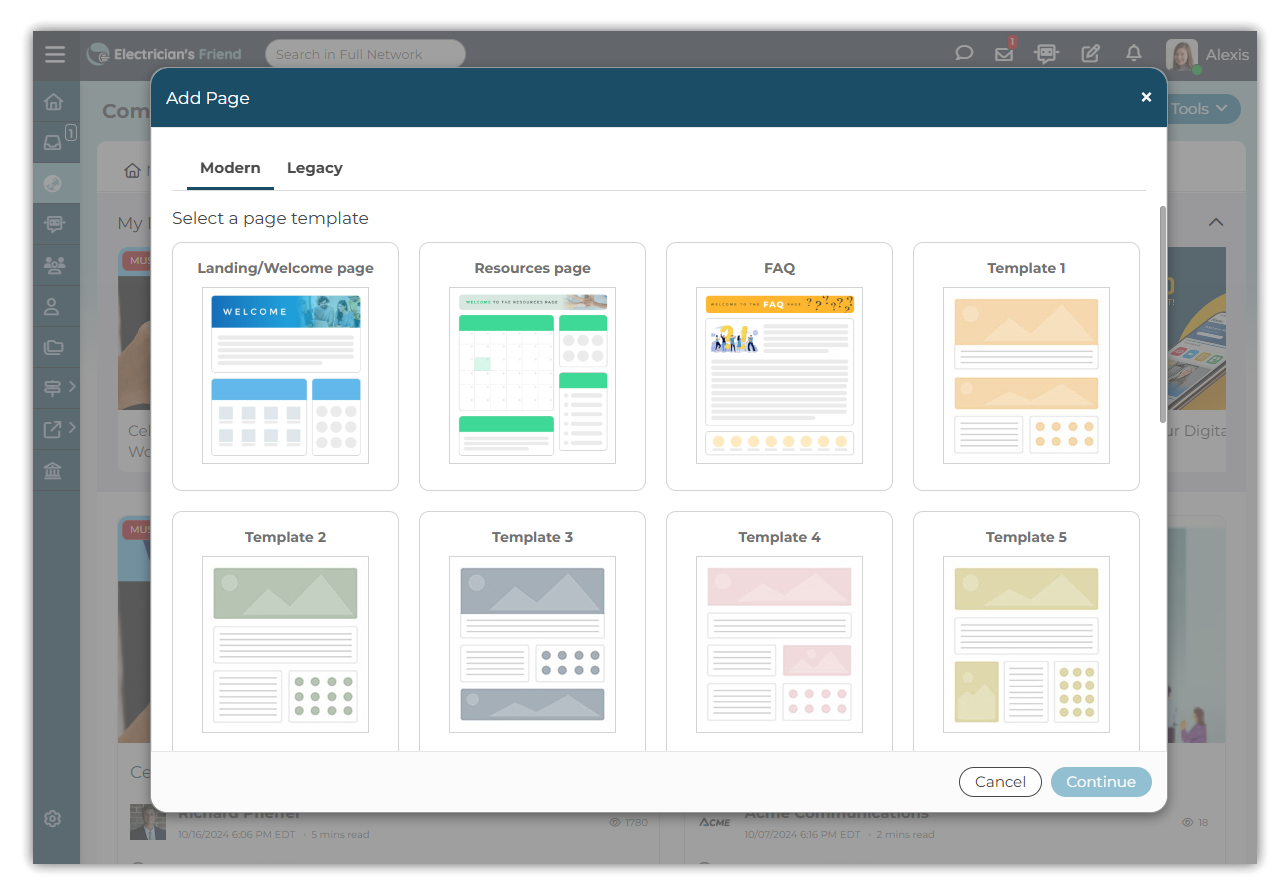
Creating a new, internal, page will give you access to the Add Page pop-up menu. From this menu, users can choose a template to help get them started with their content creation.
{% hint style="warning" %}
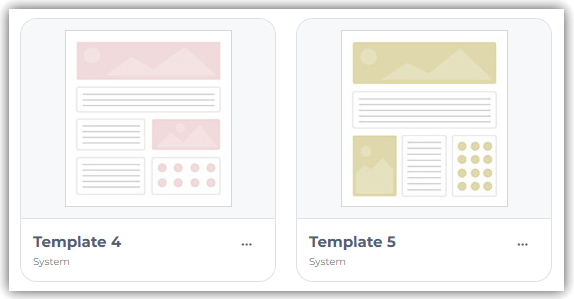
You cannot change the number of content columns after selecting a template. Be sure to review the available column options on the page before confirming your template choice.
For example, Template 4 divides the page into two columns, allowing up to two content boxes to be displayed side by side. Template 5, on the other hand, uses a three-column layout, accommodating up to three side-by-side content boxes.
{% endhint %}
***
### Title
The first step is to create a unique title and description for the new page.
Enter a unique **Title** for the page (50-character limit) — this will display on the page tab. Optionally, add a **Page Title** (up to 100 characters) and a **Page Description** (up to 500 characters). You can also create an icon for the page.
***
### Design
MangoApps offers Modern templates, which allow users to customize a page using the widget library, and Legacy, which allows users to customize a page using only text and rich text blocks.
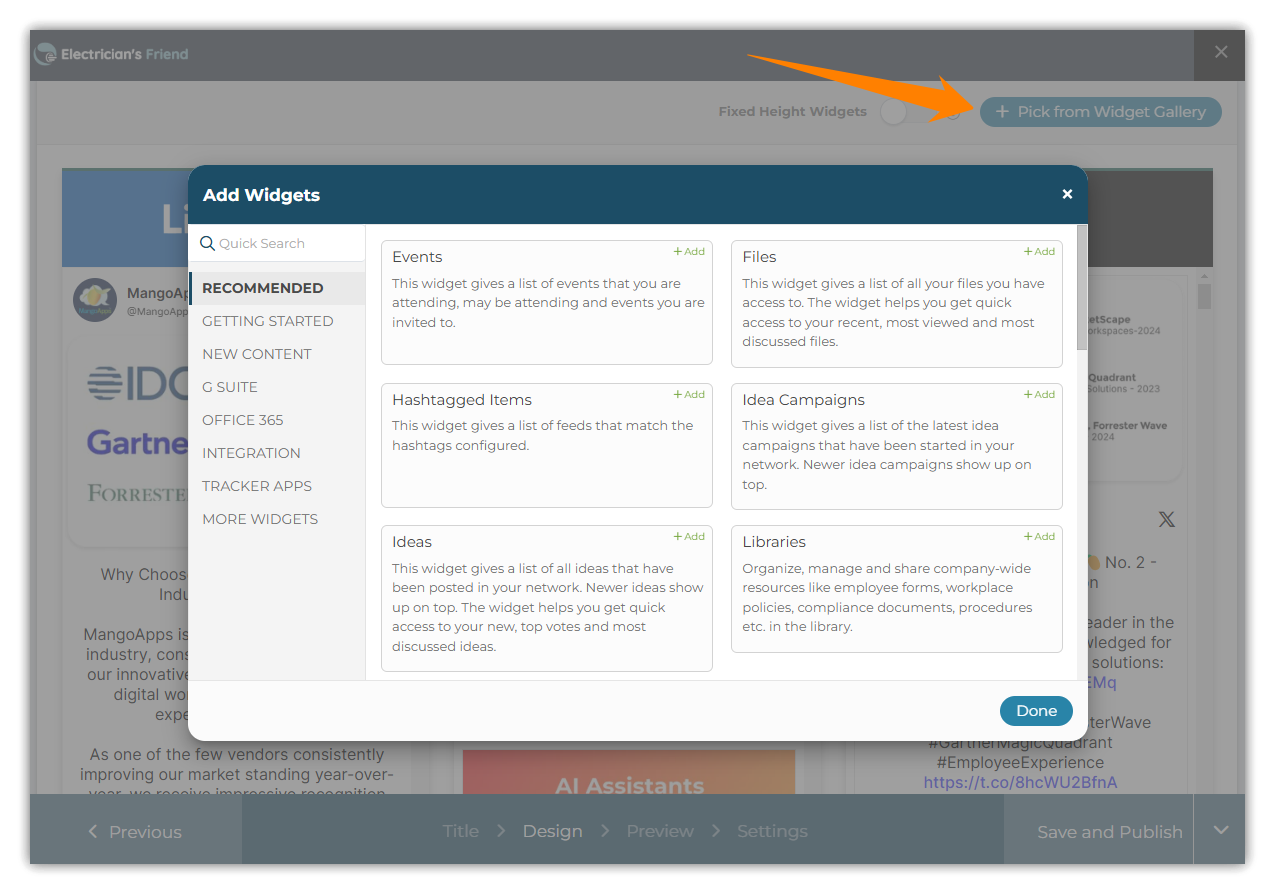
**Modern Page Templates**: Modern templates feature a widget gallery of over 50+ widgets that can automatically pull existing content already in MangoApps and makes it available on this page. Additionally, you can easily add your own content to it like the static templates allow you to do. The dynamic page templates also allow you to resize, reorder, add and remove widgets from the page, giving you the control and flexibility to design the page with any layout requirements and no programming knowledge.
**Fixed Widget Heights**: This option aligns widgets within a row to the same height.
{% hint style="success" %}
**Widget Visibility**
Admins can apply **conditional visibility** to widgets on **Project, Group, Department, and Company pages**, allowing page content to be tailored to specific user segments without creating separate pages for each audience.
From the widget’s **Set Properties** menu, admins can set **Visibility** to **Everyone** or **Specific User Segment** and select up to five user segments. Available segment types vary by page type to ensure appropriate targeting for network and guest users.
Widgets with conditional visibility appear only to users who belong to at least one of the selected segments. If a user does not have access to any widgets on a page, an empty state is displayed. The same visibility rules apply across web and mobile.
{% endhint %}
**Legacy Page Templates**: Text only pages help get content online quickly and easily. Select a page template with a layout that best suites the kind of content needed to write.
**External Page**: External pages help you link to any secure page or site. This is a great way to link any page that may or may not have been created within MangoApps.
Click on **Next**
***
### Preview
Preview the page design as users will see it via mobile and web.
Click on **Next**
***
### **Select Settings**
The last step is to configure additional **Settings** to enhance the page's functionality.
Adding **Hashtags** will make the page more searchable, while enabling **Comments** lets users leave feedback and ask questions. Turn on **Reactions** to allow users to like and respond to content.
Enable the **Change Log** to keep a record of edits. Additionally, choose whether to restrict page view tracking to admins or make it visible to all users.
For advanced customizations, you can enable **JavaScript** to run custom code (make sure external URLs use HTTPS) up to 10,000 character.
{% hint style="info" %}
Javascript execution in the domain must be turned **ON** for this option to work. Enable the setting from the admin portal under **Domain › General Settings › Enable JavaScript**.
{% endhint %}
Manage **Auto-Governance** to keep the content up-to-date.
***
### **Save and Publish**
Finally, **Save As Draft and Exit** to save edit progress or **Save and Publish** to make the page accessible to your team or network.
Alternatively, authors can schedule **Company and Team pages** to publish automatically at a specified future date and time.
During the page publishing process, authors can enable **Schedule it**, select the desired publish date and time, and choose **Save and Schedule**. Scheduled pages remain hidden from end users until they are automatically published at the scheduled time.
Scheduled pages can be managed from **Tools > View Planned Pages**, where they display a **Scheduled** status along with their planned publish date and time. Authors can edit or delete a scheduled page or select **Publish Now** to publish it immediately.
Creators can choose whether publishing a **Company Page, Team Page, or Wiki** generates a news feed entry and notifications via the pop-up.
{% hint style="success" %}
If someone comments later, a **feed entry is created automatically** and notifications are sent.
{% endhint %}