> For the complete documentation index, see [llms.txt](https://guides.mangoapps.com/llms.txt). Markdown versions of documentation pages are available by appending `.md` to page URLs; this page is available as [Markdown](https://guides.mangoapps.com/user-guide/trackers/trackers-and-forms-widget.md).
# Trackers and Forms Widget
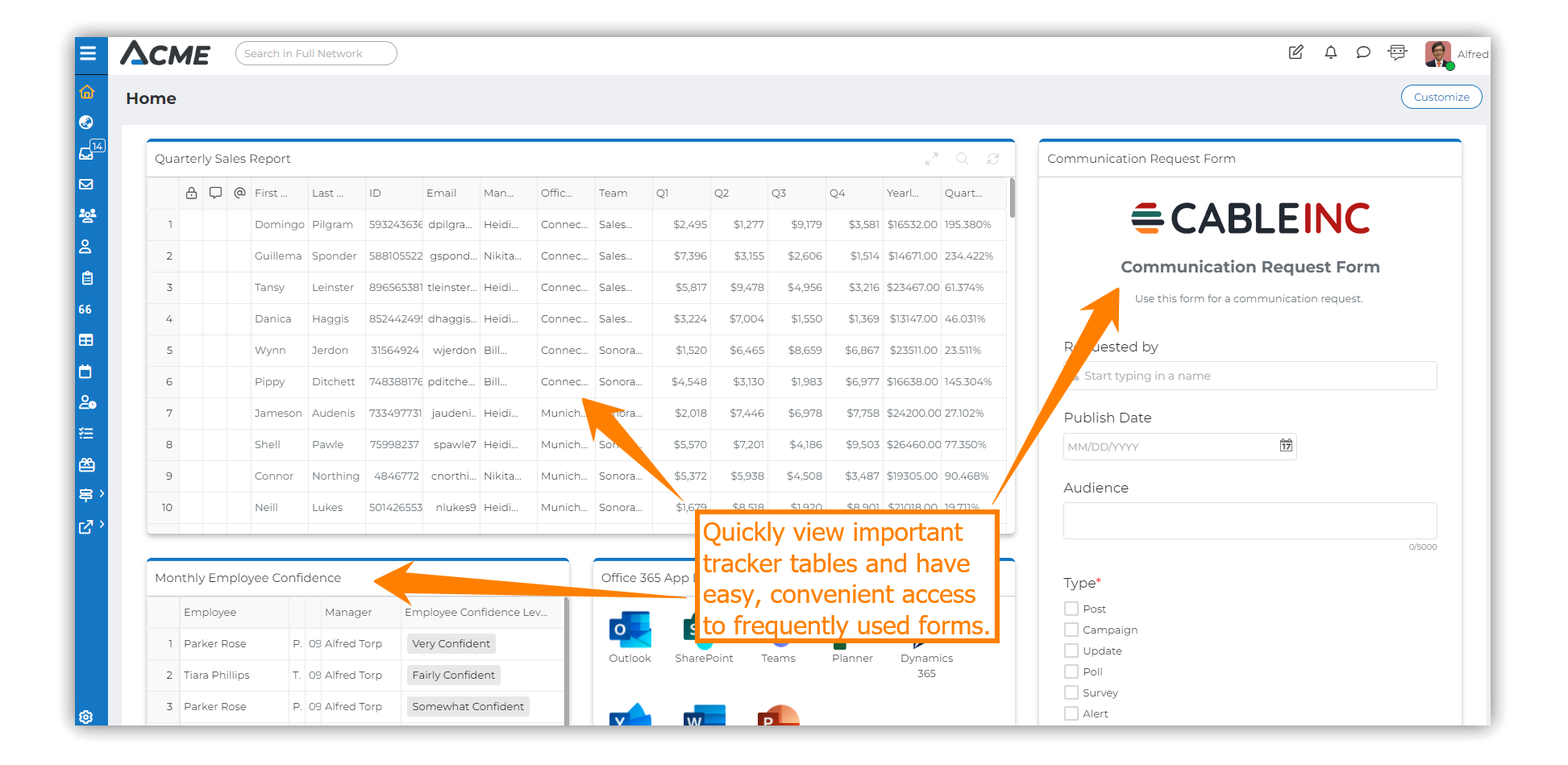
MangoApps offers the ability to include quick views of Trackers and Forms by way of widgets.
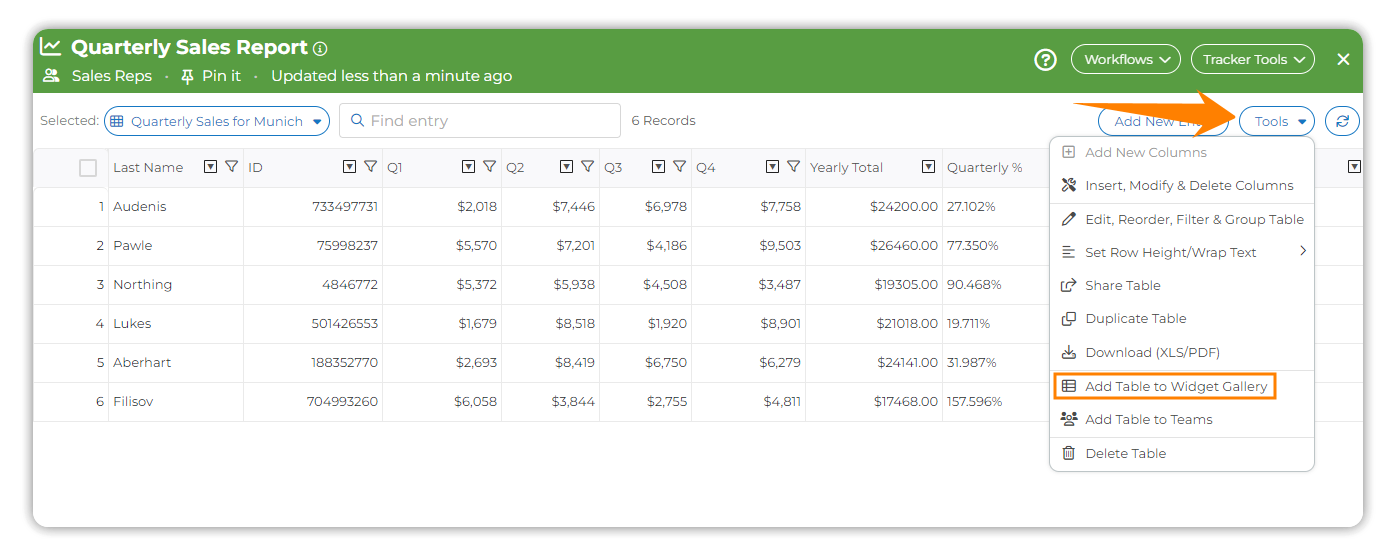
Once you have set up a table within your tracker (click [here](https://guides.mangoapps.com/user-guide/trackers/trackers#adding-a-new-table-view) for more information on setting up tables) click the **Tools** menu. From here, you will see the option **Add Table to Widget Gallery**.
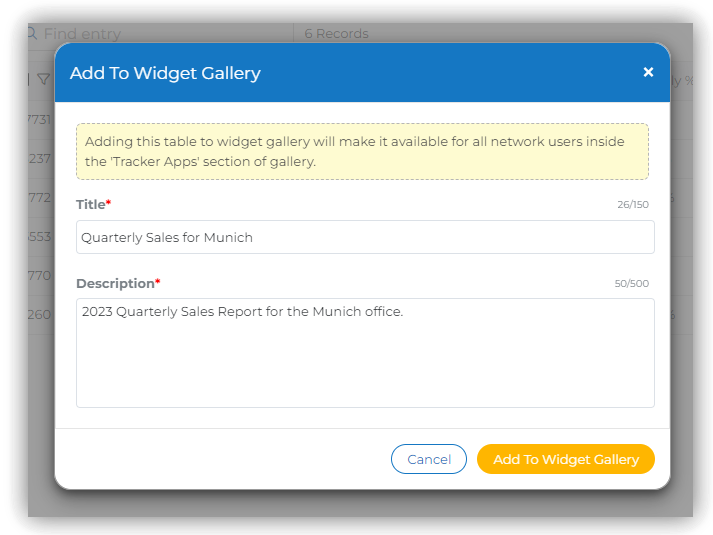
When you click this option, the **Add to Widget Gallery** pop-up menu will appear.
The **Title** and table **Description** will automatically be inherited from your table. However, you have the option to edit them before adding the widget.
{% hint style="danger" %} **Important:** The selected table will become **visible to anyone** who has access to the widget gallery (e.g., Network and Team Admins adding widgets to pages, Network Users if the home module is customizable).
The content in the table is **visible to everyone** (including Guest Users) if the widget is added to a company page or home module.
Removing the widget from the widget gallery will **NOT** remove it from instances the widget has already been added to a page or home module.
Although the table is automatically shared via the widget, the full Tracker is **NOT** shared. \
Users will **NOT** have full access to trackers and private trackers for which they did not already have access.
{% endhint %}
Follow along with this video for the step-by-step process to turn a table within your tracker into an easily accessible widget for all network users:
{% embed url="" %}